



Learn about the changes and benefits you should consider in your upcoming tax planning.
Each year, the Internal Revenue Service (IRS) makes inflation adjustments to certain tax amounts to reflect changes in the cost of living. These updates modify income thresholds, deductions, and tax benefits to prevent taxpayers from facing a higher tax burden solely due to the effects of inflation.
The tax adjustments for the 2026 tax year affect more than 60 tax provisions, including standard deductions, federal income tax brackets, tax credits, and certain limits applicable to businesses and investors.
However, an increase in deductions or income thresholds does not necessarily mean that all taxpayers will pay less in taxes, as the outcome depends on their income, business structure, deductions, and tax situation.
The new amounts apply to the 2026 tax year and will generally be reflected in tax returns filed during 2027. Understanding them can help you evaluate your financial and tax decisions before the end of the year.
How Much Will the IRS Standard Deduction Increase in 2026?
One of the most important changes is the increase in the standard deduction, which allows certain taxpayers to reduce their income subject to federal income tax without having to itemize their deductions.
For 2026, the new amounts are:
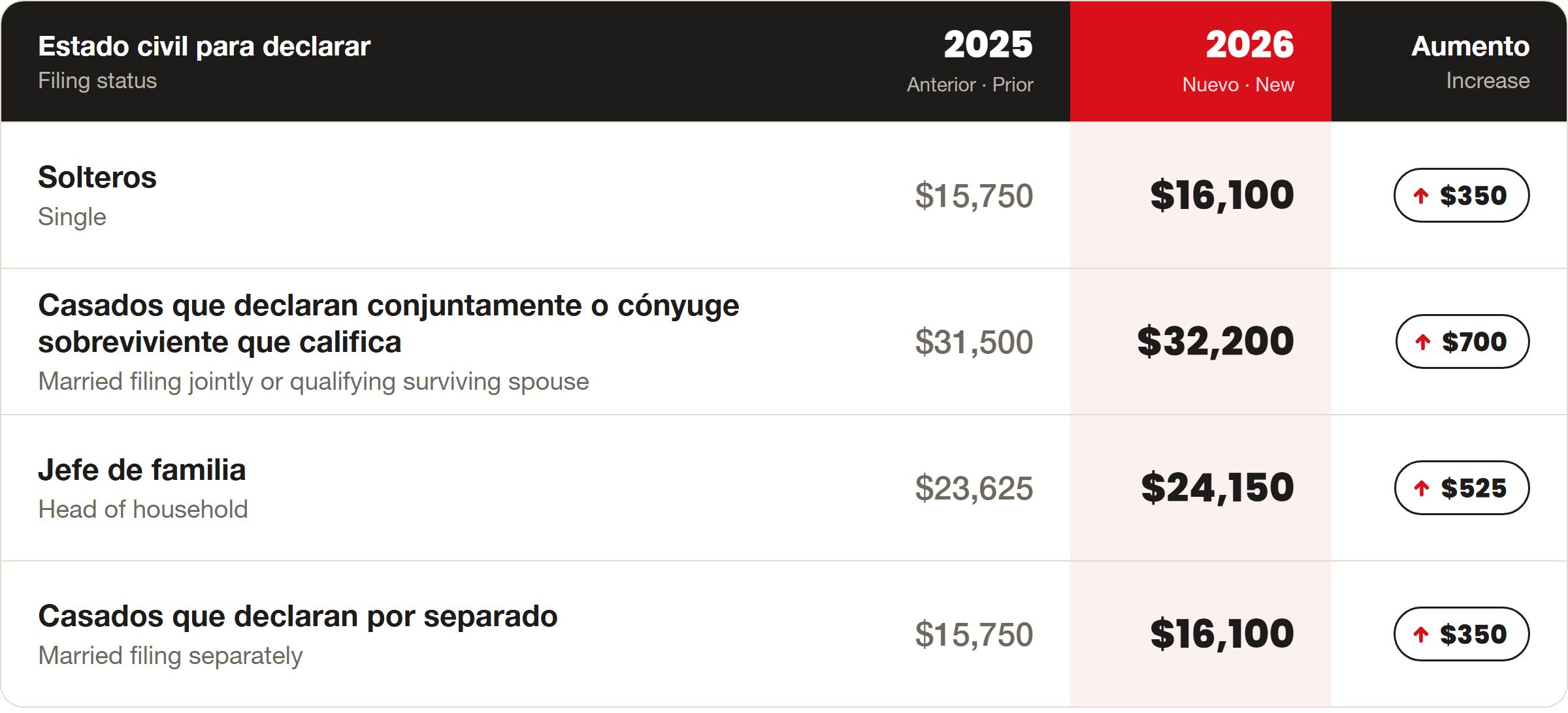
The ranges are presented in dollars
For example, a married couple filing a joint tax return may use a standard deduction of $32,200 in 2026, representing an increase of $700 compared to the previous year, provided they meet the applicable requirements.
However, not all taxpayers qualify for the standard deduction, and depending on their circumstances, it may be more beneficial to itemize their deductions.
For business owners whose businesses are taxed through their individual tax returns, these changes may also influence their personal tax planning, especially when they receive income from limited liability companies (LLCs), partnerships, or S corporations.
What Changes in Federal Income Tax Rates for 2026?
Marginal federal individual income tax rates remain between 10% and 37%, but the taxable income thresholds that determine each bracket have increased due to inflation.
Below are the federal income tax tables for the 2026 tax year, according to your tax filing status.
Click on the image to find out which section it belongs to.
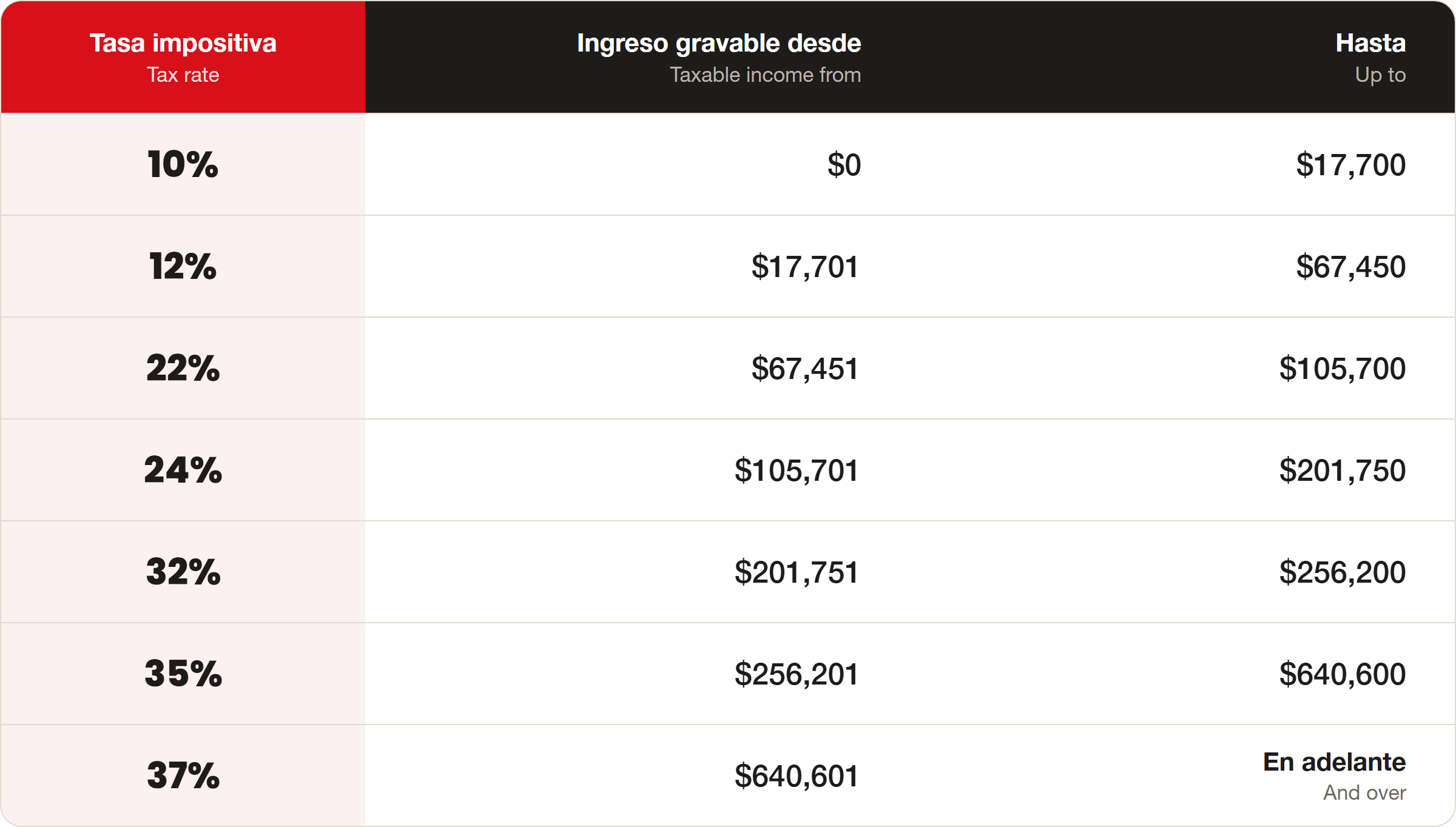
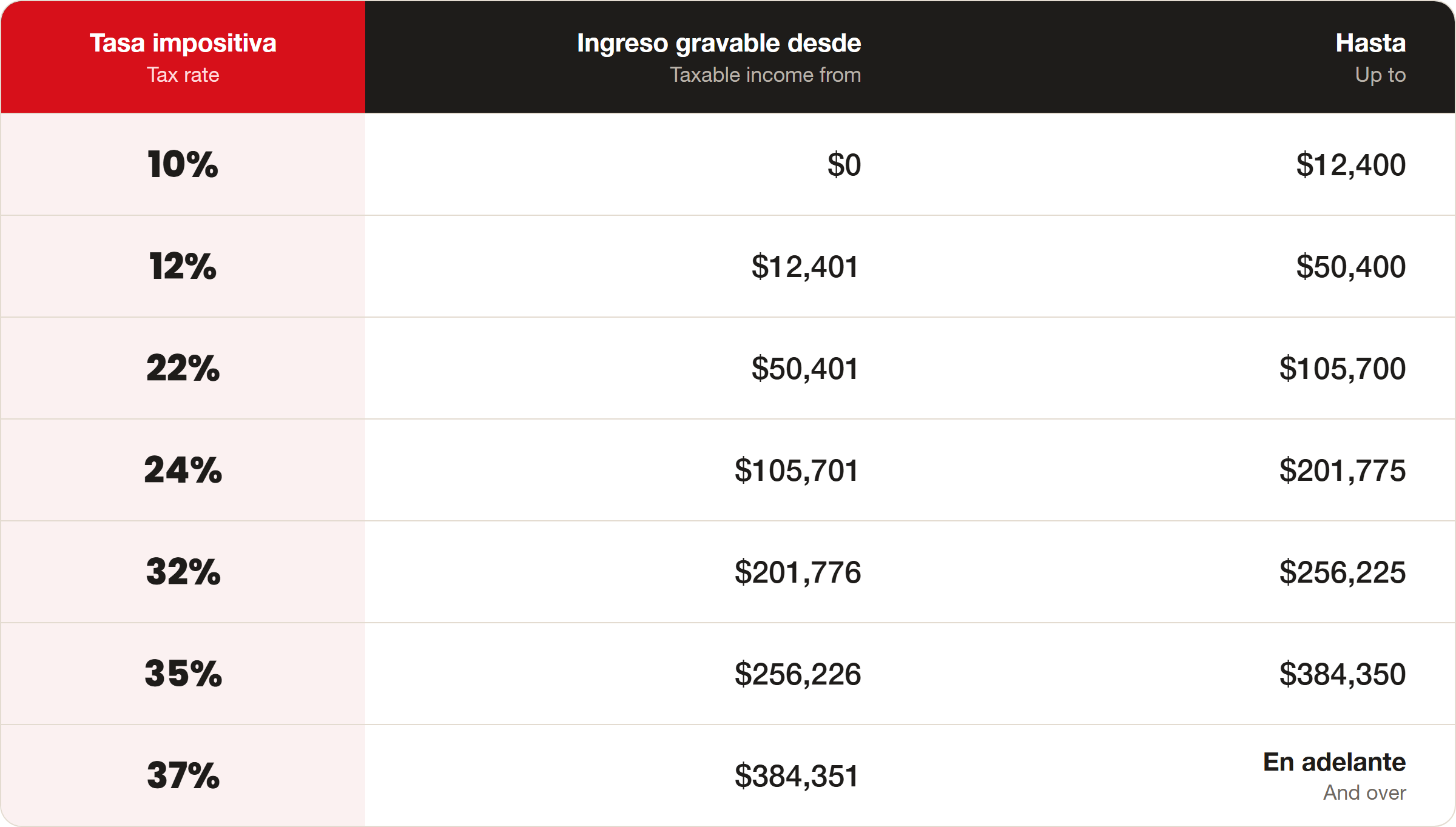
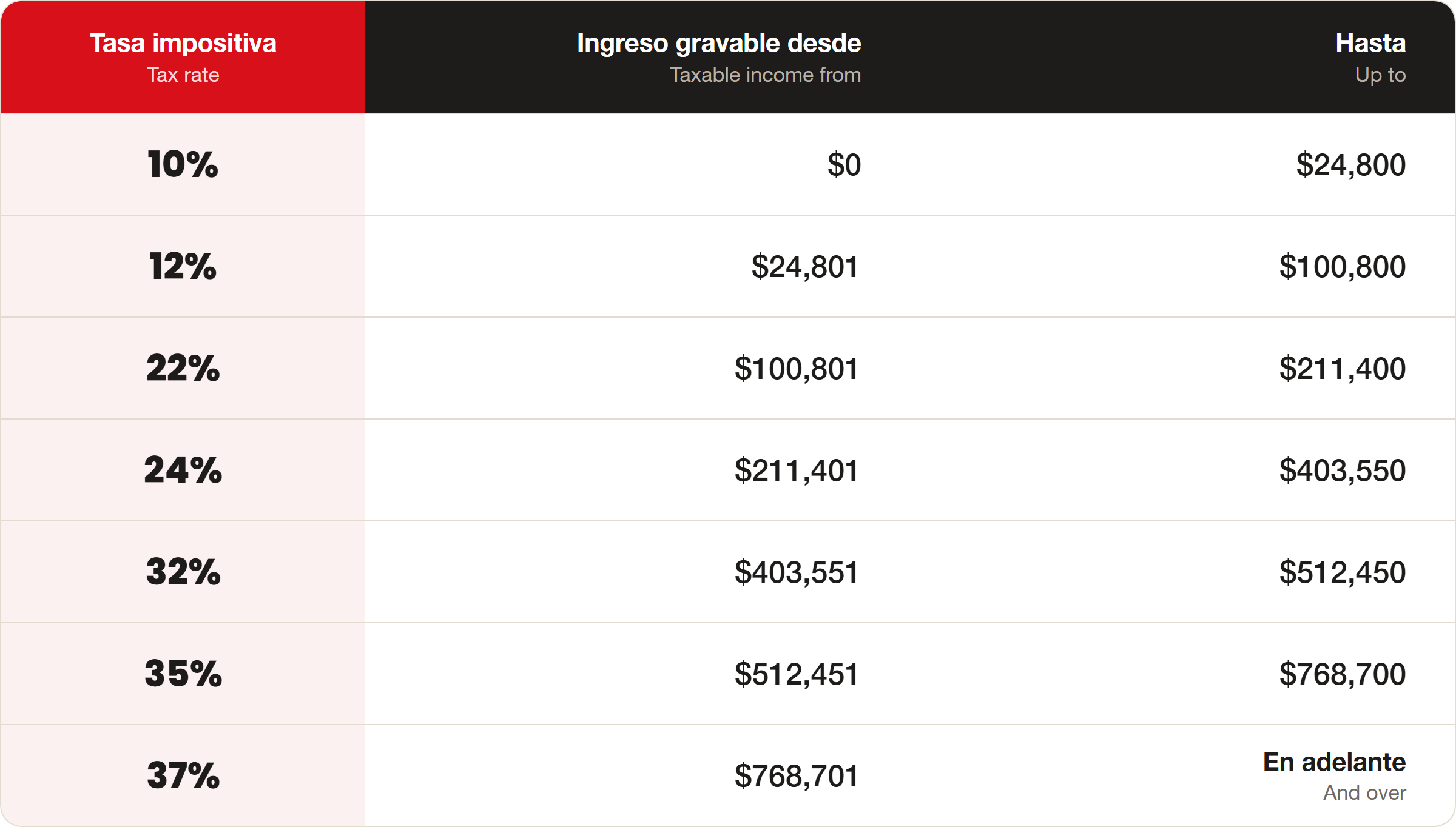
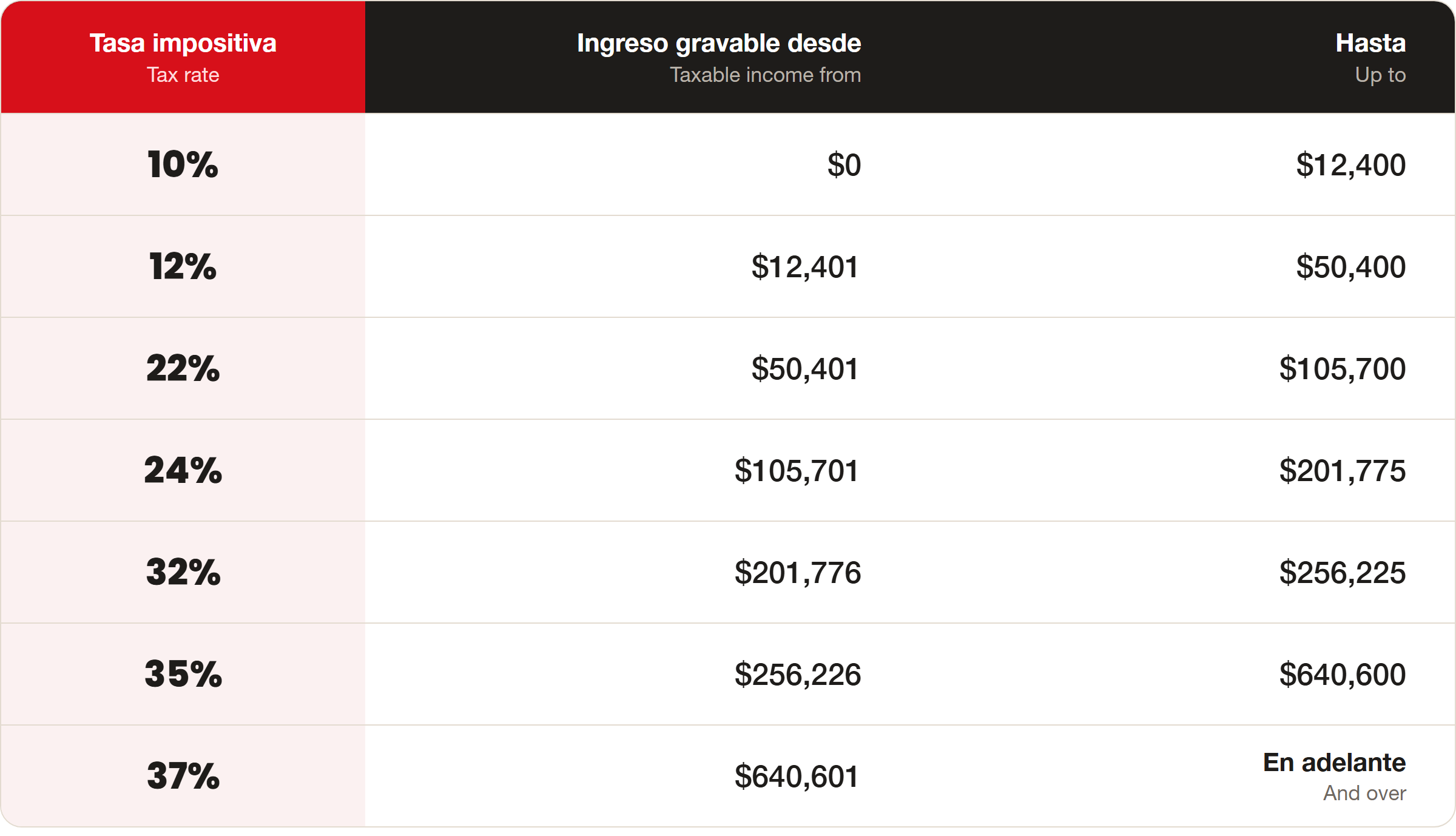
The ranges are presented in dollars.
The percentages are applied progressively to different portions of taxable income, not to the taxpayer's entire income. This means that moving into a higher tax bracket does not mean that all your income will be subject to a higher rate.
An individual could remain within the same tax bracket and still experience changes in their tax calculation due to the new thresholds.
At Jambrina CPA, we can help you project your tax obligations for 2026, considering your personal income, business income, and other sources of income that may affect your tax return.
What Changes Will There Be in Deductions for Business Asset Purchases in 2026?
For businesses, one of the most relevant adjustments relates to Section 179 of the Internal Revenue Code, which allows the cost of certain assets used in business operations to be deducted, provided the tax requirements are met.
The applicable limits for 2026 are:
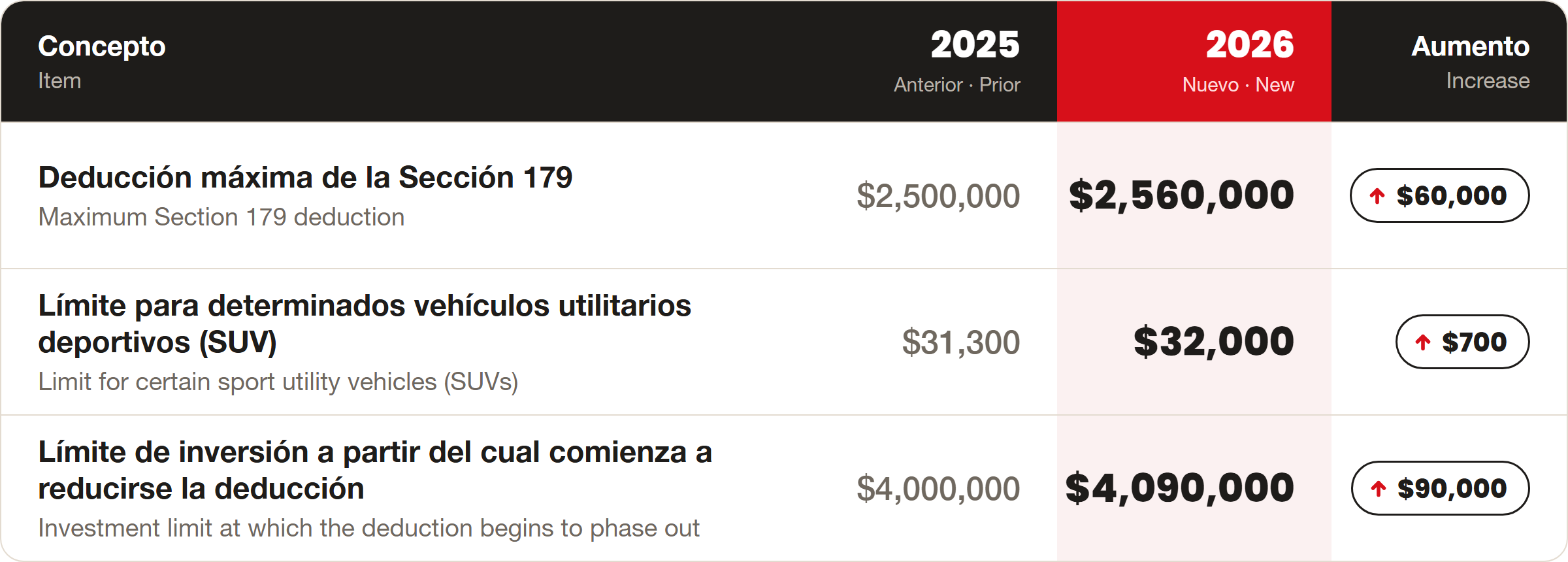
The ranges are presented in dollars
These changes may be important for companies that purchased or plan to purchase machinery, equipment, furniture, or vehicles for their operations during 2026.
However, not all purchases qualify for an immediate deduction. Investment and business income limits, the use of the asset in the business, and the rules related to placing it in service must also be considered.
For this reason, before making a significant investment, Jambrina CPA can help you evaluate its tax treatment and determine how to incorporate it into your tax planning strategy.
How Much Will the Child Tax Credit Increase in 2026?
The Child Tax Credit is one of the tax benefits that families should consider when preparing their tax returns.
For the 2026 tax year, the maximum credit remains at $2,200 per qualifying child, the same amount established for 2025.
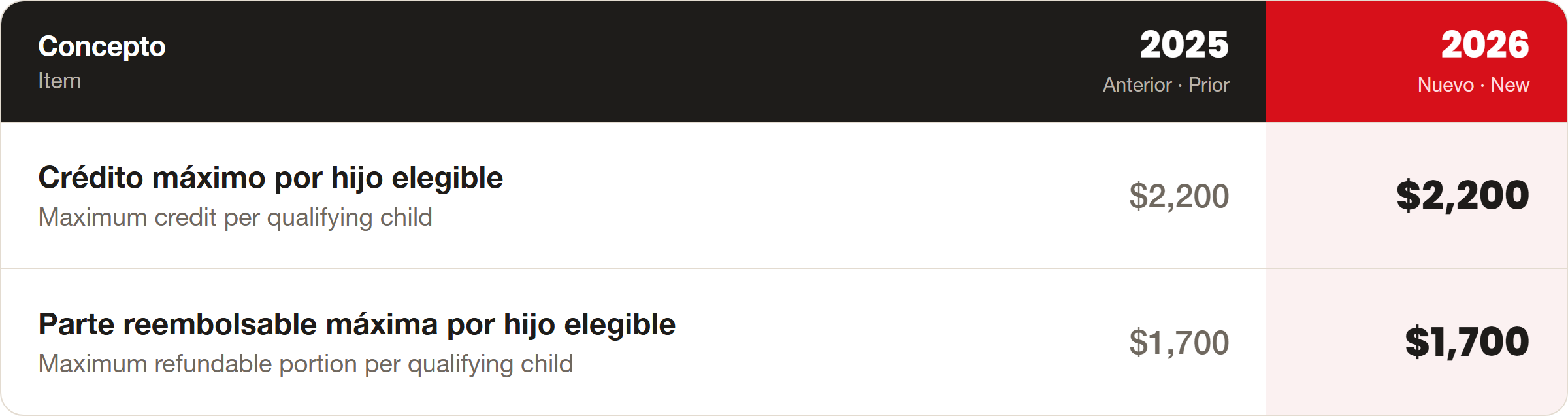
The ranges are presented in dollars
Of that amount, up to $1,700 may be refundable, depending on the requirements and the taxpayer's tax situation. This limit also remains unchanged compared to 2025.
This benefit may be relevant for families that meet the eligibility requirements, including certain business owners who file their taxes through an individual tax return.
It is important to remember that the available amount may be reduced depending on income and that there are requirements related to age, tax identification, and other conditions applicable to the dependent.
How Much Money Can I Gift or Transfer Without Paying Gift Taxes in 2026?
The tax adjustments also include limits related to gifts and estate planning, although not all of them increased for 2026.
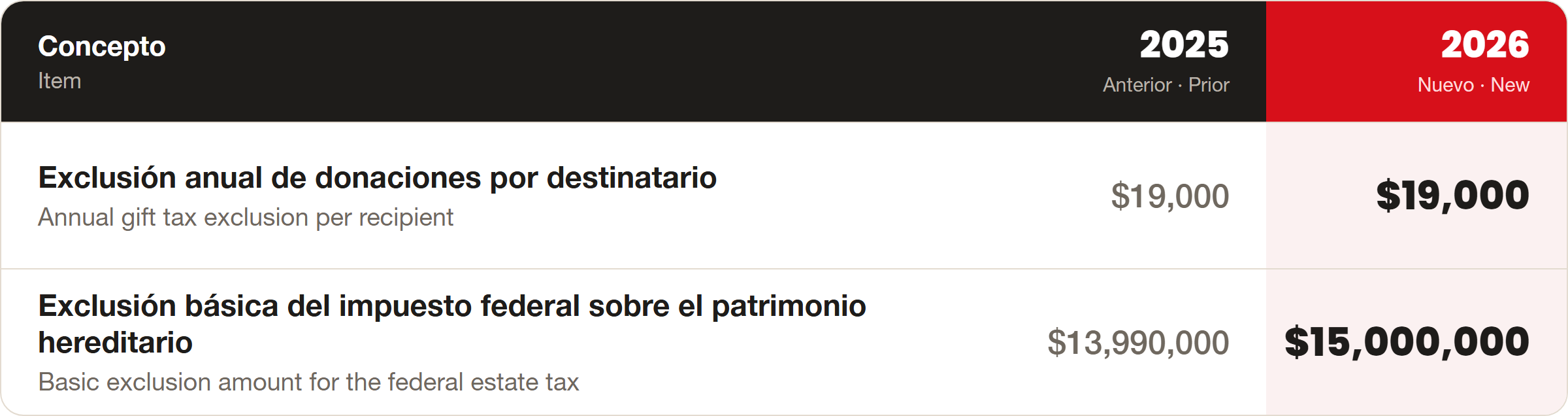
The ranges are presented in dollars
For this year, the annual gift tax exclusion remains at $19,000 per recipient, the same amount applicable to 2025.
This means that, under the general rules, an individual may make gifts of up to $19,000 to each recipient during the year without those amounts being included in the calculation of gifts subject to federal gift tax, provided the applicable requirements are met.
On the other hand, as a result of the legislative changes approved in 2025, the federal estate tax basic exclusion amount increased from $13.99 million in 2025 to $15 million in 2026 for the estates of individuals who pass away during that year and to whom this exclusion applies.
These limits may be relevant for business owners, investors, and families seeking to plan wealth transfers or business succession.
However, exceeding the annual gift tax exclusion does not automatically mean that a tax must be paid. Depending on the circumstances, there may be an obligation to file Form 709 and use part of the available lifetime exclusion. Special rules also apply to certain gifts, such as those made to spouses who are not U.S. citizens.
At Jambrina CPA, we can help you understand the tax implications of certain wealth transfers and evaluate their filing requirements.

How Can Jambrina CPA Help Me Plan My Taxes?
At Jambrina CPA, we help business owners, investors, and taxpayers with domestic and international operations understand how tax changes may affect their income, investments, and tax obligations.
Through our tax planning, business tax return preparation, accounting, and business advisory services, we can help you project taxes, evaluate deductions, review investments, and prepare a tax strategy tailored to your goals.
We also have experience in taxation for foreign owners, U.S. businesses with international operations, and U.S. citizens living abroad.
Work with a CPA who speaks Spanish and English and can help you understand tax changes and make informed decisions.
Schedule a consultation with Jambrina CPA, prepare for your 2026 tax year-end, and begin your tax planning for 2027.