



Learn how to apply for your Form 8802 and the new IRS fees
Form 8802 is used to request certification of U.S. tax residency. This document allows individuals and businesses to certify their tax residency in the United States to foreign authorities and may be necessary to claim certain benefits under international tax treaties, such as reduced tax withholding on income earned in other countries.
The Internal Revenue Service (IRS) announced an increase in processing fees for the New fees took effect on October 1, 2026, and affect both individuals and businesses and other entities that need to obtain this certification, issued by the IRS through Form 6166.
This update is especially relevant for business owners, investors, and companies with international operations, as an incorrect application can result in additional costs, delays in obtaining the certificate, and difficulties accessing certain tax benefits in a timely manner.
What Are the New Fees for Form 8802?
The IRS updated the administrative costs of Form 8802 as a result of its periodic review of the expenses associated with processing these applications.
The fees applicable as of October 1, 2026, are:
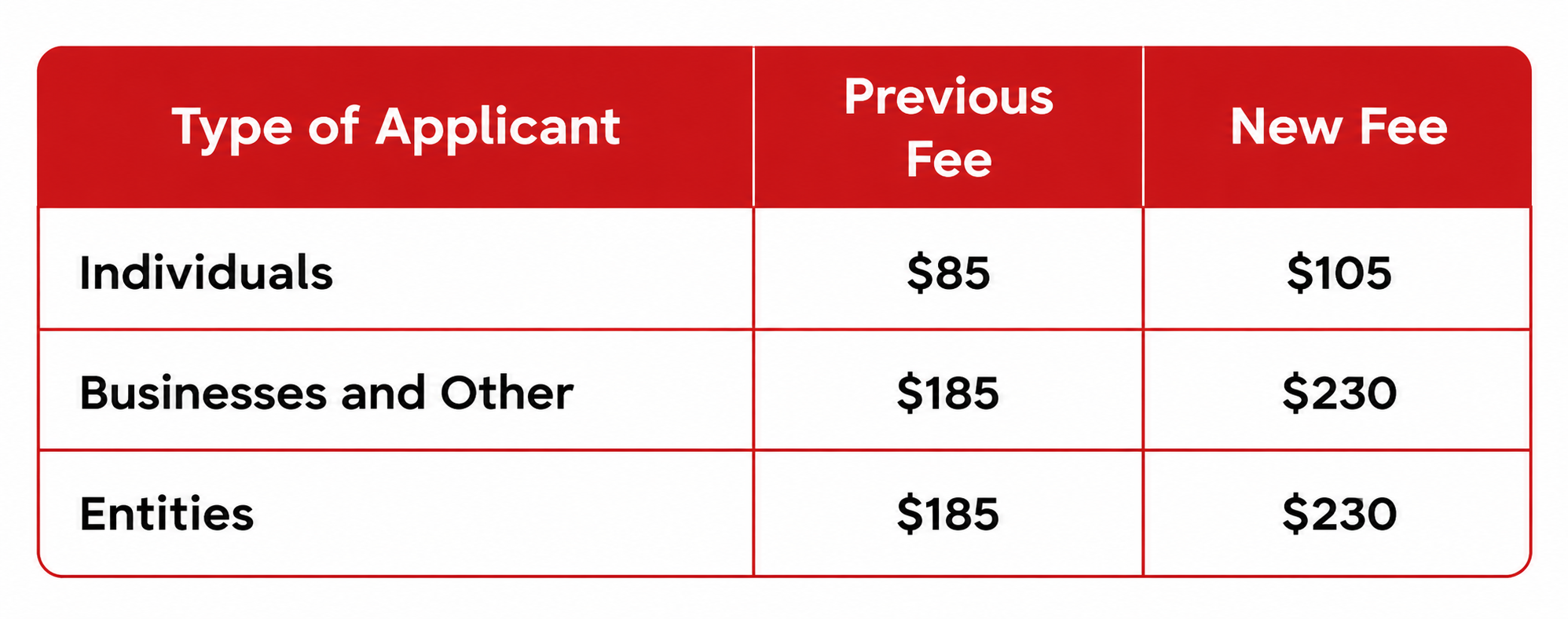
This represents an increase of $20 for individuals and $45 for businesses and other entities.
For certain pass-through entities, such as partnerships and S corporations, a fee of $230 per application generally applies, even if the IRS must verify the status of several owners or beneficiaries.
In addition, the IRS recommends including certification requests for different countries on a single Form 8802, when applicable, to avoid paying additional fees for separate applications.
What Happens If I Submit Form 8802 Incorrectly?
The IRS states that Form 8802 applications will not be processed until the corresponding fee has been paid. This means that submitting an application with an insufficient payment may stop its processing until the required amount is paid in full.
At Jambrina CPA, we can help you determine the fee that applies to your application, calculate the correct amount, and assist you throughout the filing process to reduce the risk of errors that could delay the issuance of your tax residency certificate.
It is also important to consider that fees are generally nonrefundable, except for certain exceptions related to payment errors. In addition, when payment is made electronically, the confirmation number must be included on Form 8802; otherwise, the application will not be processed.
These errors do not automatically result in a tax penalty, but they can delay the issuance of the certificate and cause complications when there is a deadline to submit documentation in another country.
How Can Not Having a U.S. Tax Residency Certificate Affect My Company?
Not having a U.S. tax residency certificate (Form 6166) when required can affect the finances of a company with international operations, especially if it receives income from other countries and seeks to access certain benefits established under tax treaties.
One of the main risks is missing the opportunity to apply reduced foreign tax withholding rates in a timely manner. Without this certificate, a foreign client or payer could apply the withholding rate established by its local legislation, which means that your company would receive less money from its operations and could experience a reduction in its cash flow.
In addition, these withholdings can complicate the business's financial and tax planning. Although in some cases it is possible to request a refund of excess taxes withheld or evaluate whether they qualify for a tax credit in the United States, these processes are subject to specific requirements and may require additional documentation.

Jambrina CPA Can Help You
If your company needs to apply for a U.S. tax residency certificate, it is important to know the new fees and ensure that the documentation is prepared correctly.
At Jambrina CPA, we help business owners, investors, and companies with international operations understand their tax obligations, review the requirements related to Form 8802, and evaluate how tax treaties may influence their operations.
Our team can help you identify the necessary documentation and review the tax aspects of your application to reduce the risk of avoidable errors and delays.
Work with an CPA in Spanish and English to keep your international operations organized and develop an appropriate tax planning strategy for your company.
The new Form 8802 fees are already in effect. Preparing your application correctly can help you avoid additional expenses and unnecessary delays.